Are You Emotionally Ready to Retire?
Are You Emotionally Ready to Retire? 7 Questions to Ask
You have worked hard for decades. You've built up your pension, hopefully accumulated some savings and perhaps even paid off your mortgage.
On paper, retirement looks achievable.
So why does the thought of actually retiring still make you nervous?
As an independent financial adviser with over 20 years of experience, I've met plenty of people who are financially ready to retire but emotionally aren't quite there.
And it's something we don't talk about nearly enough.
Retirement planning tends to revolve around pensions, investments, income and tax. All important subjects, of course.
But there's another side to retirement.
How will you actually feel when you no longer have to go to work?
Financial Readiness and Emotional Readiness Are Two Different Things
Being financially ready means having a reasonable understanding of whether your pensions, savings and other resources can support the lifestyle you want.
Emotional readiness is different.
It's about how comfortable you feel leaving behind the structure, routine and identity that working life has provided.
You can have a perfectly sensible retirement plan and still find yourself saying:
"I'll just work another year."
Sometimes that's a financially sensible decision. But sometimes the real reason has little to do with money.
Here are seven questions worth considering.
1. Do You Know What You're Retiring To?
Most people know what they're retiring from.
Early mornings. Work pressures. Deadlines. Meetings.
But what are you actually retiring to?
There's a difference between wanting to stop work and knowing what you want to do with the time you gain.
Retirement doesn't have to involve travelling the world or taking up dozens of hobbies.
But having some idea of what an enjoyable ordinary week might look like can make a significant difference.
2. How Much of Your Identity Comes From Work?
When somebody asks what you do, how do you answer?
"I'm an engineer."
"I'm a manager."
"I run my own business."
For decades, your occupation may have formed a significant part of how you see yourself.
Retirement changes that.
It doesn't mean you become less important or lose the qualities that made you successful. But you may need time to discover how those qualities fit into a different stage of life.
3. Are You Comfortable With Having Less Structure?
Work provides structure almost automatically.
You know when to get up, where you're expected to be and what needs doing.
Retirement removes much of that structure.
Initially, the freedom might feel fantastic. But eventually, having nothing in the diary can feel surprisingly uncomfortable.
You don't need to replace work with another full-time schedule.
A few enjoyable routines may be enough.
4. How Do You Feel About Spending Your Savings?
Here's something that often surprises people.
After spending 30 or 40 years saving into pensions and investments, retirement asks you to start using that money.
Financially, that might make complete sense.
Emotionally, it can feel very different.
Some people struggle with the idea of seeing their savings reduce, even when withdrawals have been carefully planned.
It's important to distinguish genuine financial concerns from the unfamiliar feeling of drawing on money you've spent a lifetime building.
5. Have You Discussed Retirement With Your Partner?
If you're married or living with a partner, retirement isn't necessarily a decision that affects only you.
One person might dream of travelling.
The other might be looking forward to gardening, reading and enjoying some peace and quiet.
Neither is wrong.
But two people can have very different expectations of the same retirement.
Talking about those expectations before work ends can help avoid misunderstandings later.
6. Can You Imagine an Ordinary Tuesday in Retirement?
Forget the holidays and celebrations for a moment.
Imagine a wet Tuesday in November.
It's 10 o'clock in the morning. There's nowhere you need to be.
What would you enjoy doing?
It's a surprisingly useful question because most of retirement isn't spent on holiday.
It's spent living ordinary life.
And learning to enjoy that ordinary life is an important part of emotional readiness.
7. Can You Accept That Retirement Won't Be Perfect?
Some people delay retirement because they're waiting for complete certainty.
They want to know the money will last, that they'll enjoy retirement and that they won't regret leaving work.
Unfortunately, life doesn't offer those guarantees.
Good planning can help you understand your options and prepare for uncertainty.
But emotional readiness doesn't mean having no doubts whatsoever.
It means understanding those doubts and feeling more comfortable making decisions despite them.
Retirement Is a Journey, Not Just a Date
This is why I believe retirement planning needs to look beyond money.
Financial planning can help establish whether retirement is affordable.
But emotional preparation can help you understand how life might feel once you get there.
In my first book, Retirement: It's Personal, I explored how money, emotions and lifestyle need to work together.
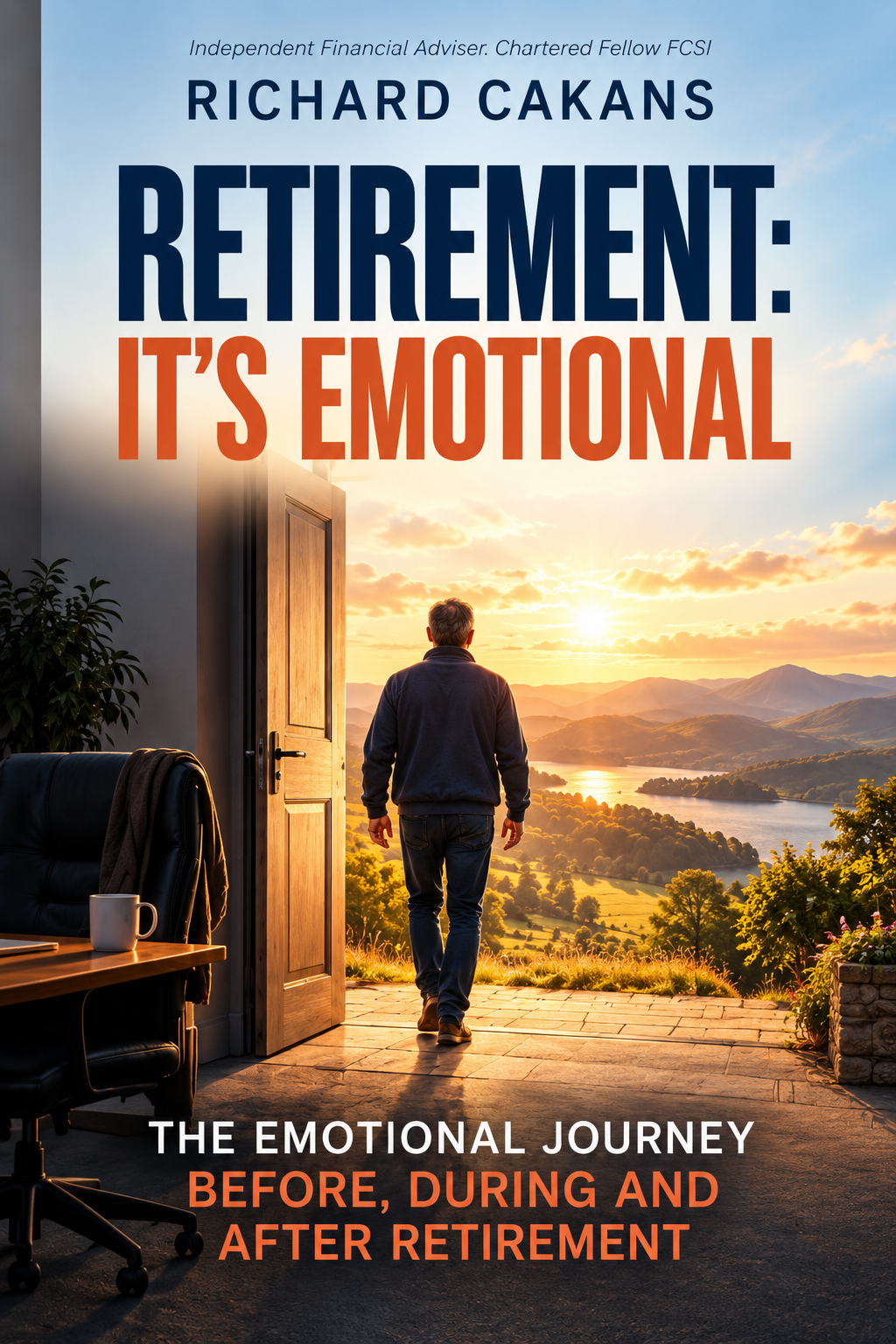
My new book, Retirement: It's Emotional — The Emotional Journey Into and Through Retirement, takes a deeper look at the thoughts and feelings that can arise as working life comes to an end.
It covers fear, uncertainty, identity, changing routines, relationships and finding purpose beyond work.
Because retirement isn't simply about having enough money.
It's about feeling ready for the life that money is there to support.
Discover Retirement: It's Emotional on Amazon
Richard Cakans is a UK Independent Financial Adviser, Chartered Fellow FCSI and author of the Retirement: It's… book series. Based in Cumbria, he works with clients throughout the UK.
This article provides general information and is not personal financial advice